Work at Cape Flats Advanced Water Reclamation Plant halfway there
15 April 2025
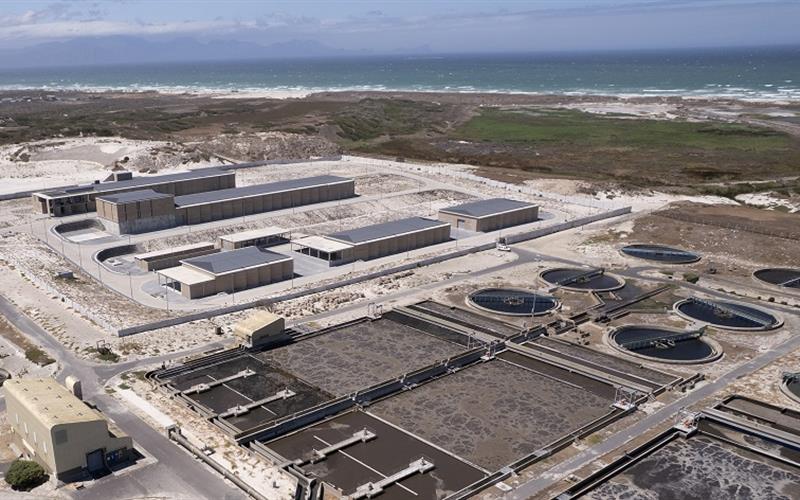
The City’s first Advanced Water Reclamation Plant (AWRP) is on track with the civil works completed in December 2024. This major milestone comes after work on the over R1,3 billion project started in November 2021. The AWRP, situated next to the Cape Flats Wastewater Treatment Works (WWTW) in Pelican Park, is a vital part of the City’s groundwater action plan to securing alternative water supply sources.
The state-of-the-art Cape Flats Advanced Water Reclamation Plant (AWRP) will play a crucial role in the managed injection of treated secondary effluent into the Cape Flats Aquifer, replenishing this vital groundwater source.
This will enable the City to abstract water from the aquifer sustainably, which will then undergo further treatment at potable water treatment plants (WTPs) to meet SANS 241 drinking water standards. The AWRP is a key component of the Cape Flats Aquifer Management Scheme, which is expected to yield up to 54 million litres of water per day.
Project milestones
The civil works for the project were completed in December 2024 and included the construction of multiple buildings to house administrative offices, mechanical and electrical equipment, and operational staff. The next phase is the installation of the mechanical and electrical equipment through a contract awarded in August 2024. This phase is scheduled for completion by April 2027, with a budget allocation of R600 million. The facility will primarily consist of water treatment infrastructure, including: dual media filters, ozone generators for disinfection, biologically activated carbon filters, ultraviolet (UV) disinfection units, and multiple pump stations.
‘Groundwater is one of the alternative water sources that the City is investing in to ensure that our water supply can withstand future climate change like drought.
‘Fortunately, this kind of management of ground water sources is not new for the City, as the Atlantis Water Resource Management Scheme has already been in operation since the 1980s,’ said Mayoral Committee Member for Water and Sanitation, Councillor Zahid Badroodien
 is half way there 4~r19.jpg)
The process explained
Managed Aquifer Recharge (MAR) is an environmentally sustainable method for ensuring an adequate groundwater supply. This process involves injecting highly treated wastewater into the aquifer to replenish it.
The water then undergoes further purification as it naturally filters through rock, sand and soil, before being abstracted downstream. It will then be treated once more at a Water Treatment Plant before distribution as drinking water.
MAR is also used to form barriers along the coast to prevent sea water from seeping into the aquifer's fresh water supply. Should this sea water enter the aquifer, the City will not be able to use the water for its municipal drinking supply.
Ensuring Cape Town’s water security
‘Cape Town is investing more in infrastructure than Johannesburg and Durban combined, with a capital budget 91% larger than Johannesburg and 117% larger than eThekwini over the next three years.
‘Water and Sanitation represents 42% of our approximate R120 billion, 10-year infrastructure pipeline. Funding critical projects which form part of the New Water Programme, will produce 300 million litres of drinking water daily by 2030.
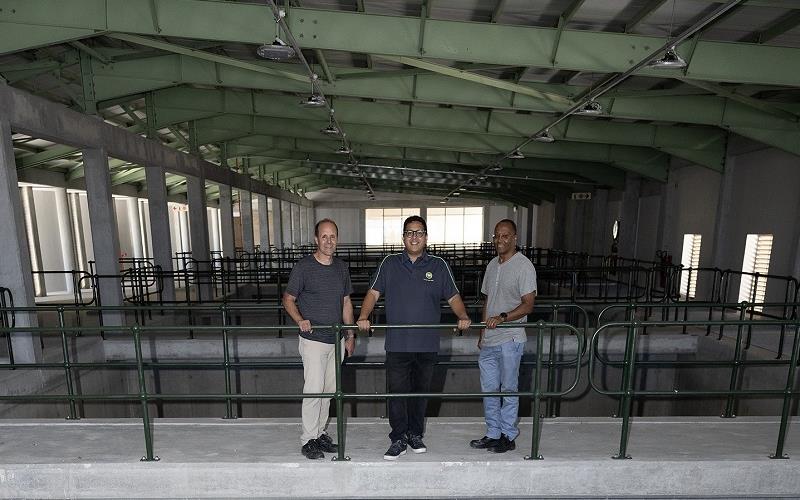
‘The milestone reached with the Cape Flats Management Aquifer Scheme completing the civil works is significant, and as we progress with mechanical and electrical installations, the facility is on track to be fully operational by April 2027,’ said Councillor Badroodien.
End
Published by:
City of Cape Town, Media Office